Comparing Word documents helps identify changes. Online tools can compare files, but integrating comparison into your own application often requires custom code. This article shows how to compare two Word documents in Python.
- Python Library for Comparing Word Documents
- Compare Two Word Documents
- Additional Options for Word Document Comparison
Python Library to Compare Word Documents
To compare DOCX or DOC files, we use Aspose.Words for Python. This library lets you automate word‑processing tasks directly from Python. Install it from PyPI with:
pip install aspose-words
Compare Two Word Documents in Python
Aspose.Words for Python simplifies document comparison. Changes appear as revisions in the first document. Follow these steps:
- Load the first document with the
Documentclass. - Load the second document with the
Documentclass. - Call
compare(Document, string, datetime.today())on the first document. - Check
Document.revisions.countto see if differences exist. - Save the first document to keep the revisions.
Here is a code sample that compares two Word documents:
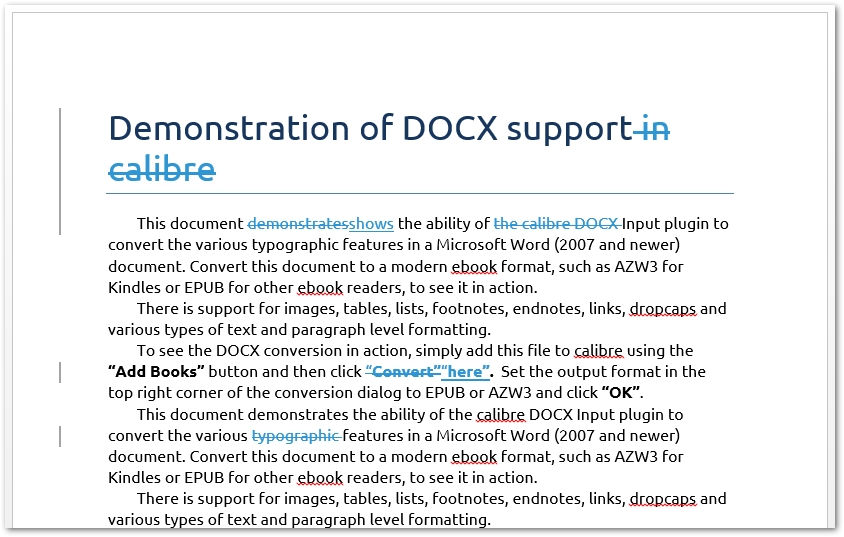
The comparison result looks like this:
Additional Options for Comparing Word Documents
Aspose.Words also offers options to fine‑tune the comparison process, such as ignoring headers, footers, or comments, and setting granularity to characters or words. Use these steps:
- Load the first document with the
Documentclass. - Load the second document with the
Documentclass. - Create a
CompareOptionsinstance and set the desired settings. - Call
compare(Document, string, datetime.today(), CompareOptions)on the first document. - Check
Document.revisions.countfor differences. - Save the first document to retain the revisions.
The following sample demonstrates custom comparison options:
Get a Free API License
You can get a temporary license to use Aspose.Words for Python without evaluation limits.
Conclusion
This article taught you how to compare two Word documents in Python and how to control the comparison with various options. Explore more Aspose.Words features in the documentation. For questions, visit our forum.